Thursday, July 26, 2012

Hide and seek


This morning, Benja headed north towards the Burundian border in a last-ditch effort to make it home in time for his brother’s wedding in Minnesota. His flight was supposed to leave via Dar es Salaam a couple days ago, but when the incoming Precision Air plane blew THREE tires upon landing in Kigoma the day of his supposed departure, all subsequent flights were cancelled until they could 1) clear the dirt runway and 2) truck in replacement tires from Arusha.

Seriously.

Yvonne’s flight was cancelled as well, and in order to make her vacation to Mafia Island (and avoid losing 800 bucks in non-refundable travel costs), she ended up paying some random guy to drive her 8 hours to Mwanza to catch a flight to Dar.

Getting to and from Kigoma is…difficult.

With all the trouble we've had this season, it seemed like Tanzania didn't want us here anymore.

Now she apparently never wants us to leave...

So with Benja at large, “weeklies” fell to me and our REU this week. Since I’ve always been the boat person during weeklies, I was a little concerned about 1) all the free diving wreaking havoc on my ears and 2) actually being able to FIND the IER’s that Ben places on the benthos and  magically recovers each week. But as Pete (ever so gently...) pointed out over Skype last night, I've been to these sites a brazillion times now (so it shouldn't be that hard...). 

[Brief aside: a "brazillion" of something has become a bad (somewhat dated) inside joke among Team Tanganyika and was instigated by Yvonne's former MS student, Sam (WE MISS YOU, SAM!!!). It goes a little something like this:

Three Brazilian Soldiers
Donald Rumsfeld is giving the president his daily briefing. He concludes by saying: "Yesterday, 3 Brazilian soldiers were killed."

"OH NO!" the President exclaims. "That's terrible!"

His staff sits stunned at this display of emotion, nervously watching as the President sits, head in hands.

Finally, the President looks up and asks, "How many is a brazillion?"]
 

So anyway, when your notes on site locations all seem to read "located just off a big rock" and all the shoreline starts to look the same, it's a bit intimidating.

Instead of getting too worked up about it (though honestly I did lose a bit of sleep last night, because that's how I roll...), I pretended it was a giant game of Hide and Seek between Benja and I. 

Upwelling should be occurring Any Day Now, so this set of water samples might be pretty important.

Found it (not sure why I look so confused...). I'm switching out the old IER's for new ones before putting them back in the lake.

Sando of the day (cucumber was added to the boiled egg and overly-ripe avocado after this photo-op and it was *amazing*). Not sure what made the yolk multi-colored and the white brown...but these are questions I don't want answers to. Ryan thought it looked a bit like "The Screamer"...
(I can see it...)
Ryan came along to do video transects of all 12 study sites. We have the exact same wetsuit, and we (secretly) hope Camaro will hire us to be wetsuit models ;).
Fortunately the whole event went off without a hitch (one whole day sans incident!), and we live to fight another day.

Tuesday, July 24, 2012

In praise of Saskia

We first met Saskia last summer when she appeared out of the blue with hugs, cheese, and lots of treats from Burundi (our hearts can easily be won over with food, if that wasn't clear before now). She did her doctoral work on the crabs in the Lake, and she came along on our Mahale trip to document the research and take lots of *amazing* pictures. Here are a select few from our time in paradise. Thanks for everything, Saskia!

Vanessa and I get final instructions from Pete as we gear up to dive (hunt for snails).

This is one of the hippos that set up shop at our beach.

We were all looking a little worse for the wear, but we still amazingly have smiles on after some hellish transport back to Kigoma. This photo is taken at the infamous "Prison Bar" which is a few buildings down from our hotel. Yes, it really IS the prison...

The tragic end result of deforestation...

Can you spot Benja! He's up in the bow, spooning with strangers.

Primates ran amok in Mahale

First dive of the trip!

Saying goodbye! The gear on the beach is the stuff that came later on the big boat and is just a small portion of all the stuff we brought along. It's hard to travel light with this project...

"I'm on a boat and, it's going fast and..."

Ryan and Leslie get ready to do some underwater filming.

Cyanthopharyx. These guys are BEAUTIFUL and build elaborate sand nests.


We had some free time since our gear hadn't arrived. We took advantage of the opportunity and went on a chimp walk! We didn't see any this time, but the hike through the dense forest was welcome.

We definitely went through lots of air every day.

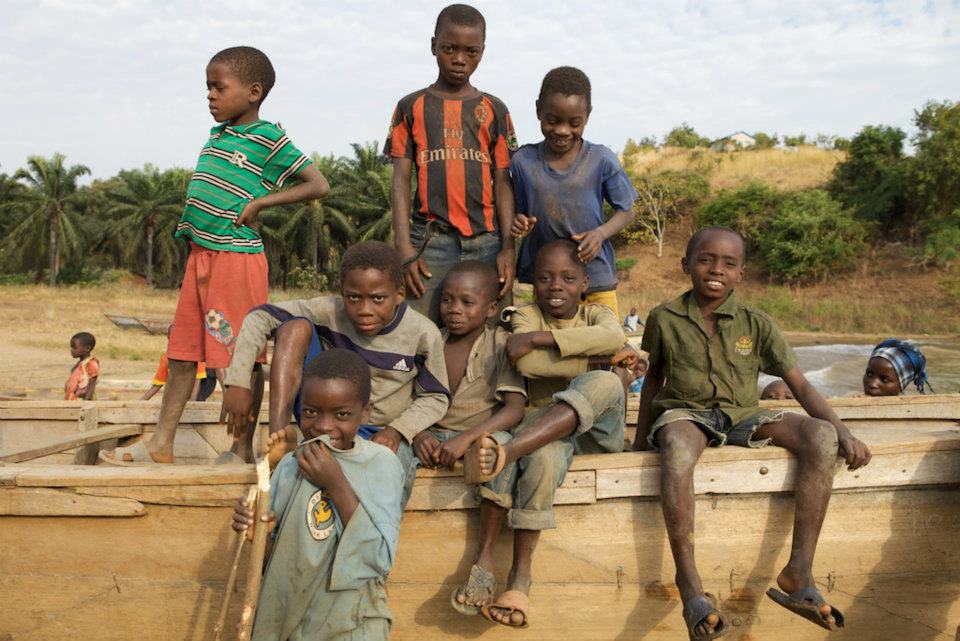
Village kids watch our arrival and departure.

The whole gang! Pete, Haruma, Magoti, Yvonne, Leslie, Ismael, Ryan, me, Vanessa, Benja, and Renalda

Red colobus monkey. Chimps eat them for dinner.

One night when we got done sampling, some chimps met us on the beach. One of the park staff grabbed us some masks (to protect the chimps from any of our gross diseases) and helped us track them through the forest. I like to think the wetsuit/bootie/PFD combo will catch on in chimp tracking circles.

Warthogs liked our camp as well.

Add caption

Lush, dense forest! I love it!

Hassan, the cook. Our Kigoma cook pales in comparison!

Nice water entry, Leslie!

Monday, July 23, 2012

Things. Can always. Get worse.


I’ve said it before.

But for some reason I keep thinking that (any minute now!) things will get easier and just fall into place.

I was all set to post a blog about yesterday’s field experience and how yet another piece of crucial field gear let us down (Spoiler alert: it was the winch! And that post is still to come). But after today’s misadventures, it seems like small potatoes…

BECAUSE TODAY OUR BOAT TRIED TO SINK.

It was super scary, and I’m currently drinking scotch, watching the sunset, and thanking my lucky stars that Benja and I made it home safely.

It’s possible I’m being a drama queen, but it’s also a damn scary feeling to be out in the middle of the lake with absolutely no hope of rescue. Historically the Big Upwelling Event occurs in the next week, so we’re trying to do daily sonde casts to track the temp changes. We got a late start today because…well, because of a lot of reasons. But again, that blog post is still to come. Suffice it to say that we were on our way back from a cast when all of a sudden the boat slowed considerably and started taking on A LOT of water. 

Floating fins and gas tank
We stopped so Benja could re-launch the sonde at Site 7, and while in the water, he had a quick gander at the underside of our 60’s era Zodiac. Our conversation went a little something like this:

Benja: HOLY SHIT.

Ellen: Say what now?

Benja: YOU NEED TO COME LOOK AT THIS. 

[Generally speaking, nothing really seems to get Benja riled up. But he had that crazy look in his eyes...]

Ellen: Really? I’m cold. 

[I had already taken off my wetsuit and didn’t really want to get back in the water. Don’t judge me…]

Benja: ELLEN. GET IN THE WATER.

Ellen: Alright (Inner monologue: Grumble grumble…; this better be worth it…)

So I put on gear and jumped into the water in my swimsuit. BRRRRRRRR…

... and saw that half of the bottom seam THAT HOLDS OUR BOAT FLOOR IN PLACE had come loose. The whole metal support for the floorboards was visible. That. Is. Bad…]

Theoretically Zodiacs cannot sink as long as there’s air in the pontoons. But since the seams don’t seem to be the strongest feature of our Jacques Cousteau-era vessel, there's no good reason to believe the pontoons have long to live either.

We made the executive decision to putt-putt back home, and we were both overjoyed and relieved to be back on solid ground again.

Nervous giggling...because we're terrified...

So now we’re down to one functional boat to share between 7 team members for the next 3 weeks.

This should be interesting…

Sunday, July 22, 2012

Deep cast


We’ve been working 14+-hour days now for as long as I can remember, and TENSIONS ARE RUNNING HIGH.

I look around every once in awhile and try to spot the secret video cameras, because I swear we’re all unknowing test subjects in a warped study on human endurance. Turns out people need time off or they start to Lose Their Minds…or at very least start having vivid mental fantasies about, oh, I don’t know…forcefully pushing coworkers off boats, tripping people down stairs, or throwing their Kindle’s into the lake (just to name a few... off the top of my head…)

But as we say on Team Tanganyika, there is no punishment for mental crimes ;).

Sensing that I might be on the verge, Pete told me I could hang back from boat work yesterday and have a few hours off the water. But it was Deep Cast day and I really didn’t want to miss out since it’s an activity that has potential to be super cool. Or it would be super cool if JUST ONCE our gear would cooperate (SPOILER ALERT! Our equipment failed! Again! I know…it was a shocker to me as well since everything had been going so smoothly up until this point…)

So: the deep cast. Benja and Pete got a fancy new piece of equipment this year that can record temperature at Super-Deep Depths (the limit on most instruments is the intense pressure at depth). Again, casts are a good way to monitor the thermocline, see if upwelling is occurring (i.e., evidence of cooler water higher in the water column), and document changes in water temp since the last published study 8 years ago. 

So we loaded up our gear, pointed the boat west towards the Congo, and drove until we could no longer see land (~12km offshore). 

I’ll say that again: WE COULD NO LONGER SEE LAND (Have I mentioned lately how ridiculously big this lake is!). The weather was eerily (and very uncharacteristically) calm and absolutely perfect for the task at hand.

Yes, I am wearing the same clothes in every single blog post, because apparently I no longer care about personal hygiene.... It's tight quarters in the old Zodiac with all that Heavy Gear.

We finally arrived at our destination, Benja slowly lowered the instrument down to 1200 meters (!!!!!!!), and then it was time to bring it up with the winch. It became progressively harder as we took turns cranking away, and at some point we noticed the pile of metal shavings that accompanied the loud metal-on-metal screeching sound. It took THREE people (given, I wasn’t as much help as the guys here) FORTY-FIVE minutes to get it back to the surface, and that was the end of our adventure since further use would have likely irreparably damaged the winch. 

Sadly Pete lost his field hat, so he re-purposed some boxers for his last day in the field. He assured me they were clean...
After the cast, we intended to send the Niskin bottle down to collect water every 50 or 100m throughout the water column, checking the conductivity and filtering/collecting water for nutrients. Tanganyika is permanently stratified, so this part (while ridiculously annoying on some level, because it’s so tedious and physically taxing) is actually really awesome. Last year around 100m the water started smelling strongly of sulfur, and after a quick glance among my team members to identify the guilty party, I realized the stench was coming from the water. Pete said that water had been at that depth for over 1500 years (!!!), and THAT is incredible. 

This is from last year's collection since I apparently don't have a current Niskin bottle pic.

Alas, that task will have to wait for another day, and we reluctantly turned the boat around and headed home. Take home message: the lake is warming (sigh), and the thermocline is a’rising. 

Rumpelstiltskin? Benja managed to fix the winch with an old saw blade (appropriate technology!). Here he's changing out the wire on the spool.

Tuesday, July 17, 2012

Just the half of it


Now that our work in Mahale has finished up, it’s time to start field sampling in Kigoma! (I’m trying to be enthusiastic here (as evidenced by the careful placement of that exclamation point), but it’s actually really hard to be here after having seen the mostly-pristine beauty of the mountains). So after one very luxurious day of doing Absolutely Nothing (it was all I hoped it could be and more!), we fueled up the engines and inflated the boats and were back to the grind of collecting data.

Since we didn’t get a chance to get in the water before we left Kigoma the first time (remember all the residency permit issues early on??…), a boatload of work awaited us upon our return to reality. Step one was to hit each of our 12 sites for what Team McIntyre affectionately calls “Weeklies.” Since I’m “boat girl” during this event, for me it’s an exercise in sunburn, dehydration, and testing the limits of my bladder. 

Boat girl and water boy
Basically Benja and I hightail it to a site (Pete came along this week for good measure), and while we dangle a sonde off the side of the boat, Ben hops in and fills some syringes with lake water for me to filter onboard. He then free dives down to 15 feet and carefully places IER’s (Ion Exchange Resins) onto the benthos. 

IER's attached with some coated wire, zip ties, and rubber bands from the CFL mailboxes.
 
Tanganyika is special for many reasons, but The Big Question we’re trying to answer is how such a nutrient-poor lake is so productive and can support such high species diversity. It’s a real head-scratcher, but water sampling and IER’s tell us a weekly story of how many nutrients are out there, available for uptake.

The second big task was to get the thermistor chain in the water and recording the temperature of the lake at various intervals down to 120 meters. 

As a totally unrelated aside, I’d like to point out that at its deepest point, Tanganyika is over 1600 METERS. A MILE. Remember field day in elementary school when the gym coach made you run around the track 4 times? For whatever reason, that’s always been my mile-reference for life, and that’s a damn long way down.

Going back to the fact that this lake is nutrient-scarce, one of the hypothesized sources of nutrients is upwelling events that bring all the (good) stuff that has sunk to the bottom of the lake back to the top. Those events are associated with slight changes in temperature (deep water is cooler), and the idea is that we will be able to watch it happen by putting loggers at various depths and downloading the digital story.
 
We made it almost all the way to the drop location before Benja realized he didn't actually activate the loggers. Pete doesn't mess around when it comes to safety (as evidenced by his wearing of the PFD indoors...)
 
In a perfect world, you’d be able to slap a buoy onto the line that holds your NINE THOUSAND DOLLAR piece of equipment, but here in Africa that would be the equivalent of a giant neon sign saying “COME STEAL ME! I AM VALUABLE!!!” So there is no surface buoy, and the buoy holding the chain is sunk to 30 feet. It takes a GPS, a good eye, and a whole lot of luck to find it again (read: a miracle)…

Go time! Pete lowers the Super Heavy Anchor over the side, and I slowly lower the rope through a series of carabiners.
It mostly went well, and after following Ben’s advice to keep it simple, it’s in the lake, doing its thing, collecting data. Last year we celebrated our successful endeavor by jumping off a cliff; this year (since The Boss was along and didn’t want us engaging in life-endangering activities) I gave the guys knucks. Goooo, team.

Totally unrelated picture to this post, but I saw this boat out during Weeklies. Biggest life raft ever? Maybe...

Wednesday, July 11, 2012

Why we’re here


Previous field research for the Lake Tanganyika Ecosystem Project has been based out of Kigoma, Tanzania’s biggest port on the lake. But earlier this year, Pete and Yvonne were approached by The Nature Conservancy to assess our interest in a field collaboration with them, Pathfinder International, and Frankfort Zoological Society at Mahale Mountain National Park.

When Pete asked if Benja and I were game, the answer was a unanimous HELL, YEAH.

Mahale is probably the most remote and least-visited of Tanzania’s national parks, mainly because it’s so damn hard to get there. It’s mostly frequented by the insanely wealthy who arrive via airplane (rooms at the 2 nearby safari camps cost $1000/ and $500/night respectively) and adventurous Lonely Planet types who brave their chances with local $2 water taxis (not a typo. Actually TWO dollars…) and stay at the park camp for $30/night. Along with Gombe, the park is famous for its population of chimps (the largest in all of Africa!), but it’s also home to a host of all the other wild animals and plants people come to Africa to see.

The purpose of our involvement is to develop a baseline for what conditions are like in the nearshore community before the instigation of the Tuungane Project (the giant collaboration between the 3 entities).

The reason the Tuungane project exists is ultimately to protect this incredible place, since preliminary household surveys revealed depressing statistics regarding the villages adjacent to the park:

1.       Half the population in the villages is under 15 years old, and a virtual population bomb awaits (a large population coming up with limited resources to support them.)
2.       There are 6.7 people/family (that’s the highest in the world…).
3.       130/1000 children born since 2006 didn’t survive until their 5th birthday.
4.       The villages have poor access to health care, and family planning is virtually non-existent.
5.       Household income comes from farming and fishing, and herein lies the problem:
Farmers clear the surrounding forest of trees to make plots for growing crops. Deforestation leads to increased sedimentation, and all that loose sediment ends up in the lake. Extra sediment covers the algae growing on the rocks that supports a large number of the grazing fish species (and the rest of the greater food web) and chokes out fish breeding sites. Fewer fish that can’t breed = fewer fish in the ecosystem = fewer fish to catch.
So they cut down more trees to make bigger plots of land to grow more food (a dangerous and unsustainable spiral).

I’ve heard this story before, as it’s a pretty common phenomenon worldwide. But even though I’ve read about it, it broke my heart to actually see it. We picked research sites inside and right outside the park, and the difference was astounding.

So our role is an important one, and it feels really great to be part of a team that will hopefully have a positive impact on this gorgeous piece of paradise.  

And over the course of 13 days, it’s become one of my favorite places in the Whole Wide World. I honestly don’t know where to begin, but here are a few of the wild events that became the new “normal” for us during our stay.

1.       Animals. Everywhere. All the time. Baboons on the roofs of our bandas, stalking and encircling us while we ate our meals outside, and chasing each other through the camp. Warthogs and bush pigs digging through the garbage heap outside the kitchen. Hornbills and kingfishers, vultures and herons, and countless other birds I couldn’t identify doing flyovers and fishing while we worked. Duiker and dik dik and mongoose silently maneuvering through the forest.

2.       Two hippos set up shop on the beach where we launched our boat each morning. We gave them a wide berth when taking off for work, and they (fortunately) never gave us any trouble.

3.       CHIMPS came down to the water and curiously watched us work collecting specimens for stable isotope analysis. Another small family group was waiting for us at the boat launch when we arrived at home one night after a long field day. We followed them through the forest in our wetsuits…


4.       Water cobras swam with us each day and mostly just tried to avoid us. Spottings are a Very Rare Phenomenon in Kigoma, but here they were spotted by multiple team members on any given day. They Are Awesome.

I probably wouldn't be so calm if this one wasn't dead. He got caught in a gillnet, and we took the opportunity to sample him for the stable isotope food web (and look at his fangs up close).


5.       The cichlid community was larger in size, occurred in higher densities, and was more diverse than anything we’d seen previously. It was pure bliss getting to swim and observe all of the incredible fish that live in the protected paradise of Mahale. I never want to get out of the water…
This picture doesn't do it justice, but it's all I have at the moment. It's a giant emperor cichlid (the biggest cichlid!) at 10m, and I've never seen any this big.

6.       CROCODILES! I never saw one of these, but one of our study sites was the place the park takes visitors when they want to guarantee a croc siting. Pete spotted one during a night dive (Our Fearless Leader takes wild chances at times…), and the WSU team saw a little guy before they started their diving for the day.

Our fearless leader...


Calling it a day and heading home
7.       Most people don’t realize it, but this lake truly has magical properties. It has the power to take away my crabbiness by the simple act of dipping my sore and exhausted soul into its waters. THAT is a miracle.